




On October 17, 2025, in Huzhou City, Zhejiang Province, China, the United Nations Tourism Organization (UN Tourism) officially announced the results of the “Best Tourism Villages 2025” Awards. Accordingly, Quynh Son Community-based Tourism Village, Bac Son Commune, Lang Son Province, was honored to be recognized as a “Best Tourism Village 2025,” after surpassing more than 270 nominations from 65 countries. This achievement marks a new milestone for Viet Nam’s community-based tourism on the global tourism map.
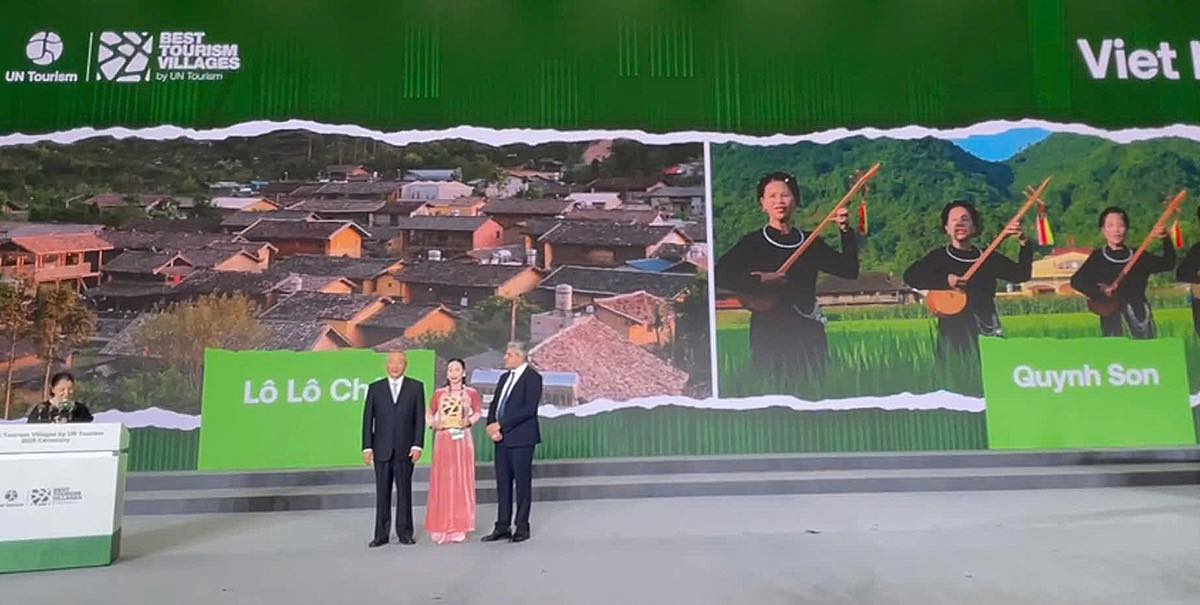
Award Ceremony for the “Best Tourism Village 2025” presented to Quynh Son Community-based Tourism Village, Bac Son Commune, Lang Son Province (Viet Nam) – Huzhou City, Zhejiang Province (China), October 2025. Photo: Collected.
Initiated by the United Nations Tourism Organization (UN Tourism), the “Best Tourism Village 2025” Award is one of the most prestigious global initiatives honoring rural destinations that demonstrate outstanding achievements in cultural preservation, environmental protection, and sustainable livelihood development in harmony between people and nature, while enhancing local community livelihoods. Villages are evaluated based on a rigorous set of criteria covering governance, innovation, environmental protection, community development sustainability, and contributions to the United Nations’ Sustainable Development Goals (SDGs).
Nestled at the foot of the majestic limestone mountain range of the Bac Son Valley, Quynh Son Community-based Tourism Village appears peaceful, with more than 400 traditional stilt houses. Layers of mountains curve like an embracing arc, sheltering the village and protecting the stilt houses that have existed for hundreds of years. Moss-covered yin–yang tiled roofs, sturdy wooden frames, and a mountain-backed position help keep the interiors cool in summer and warm in winter. Notably, most stilt houses face southwest—the direction believed to welcome favorable winds and align with Tay customs. Preserving rustic beauty and ancestral spirit, the people of Quynh Son cherish every corner of their homes, transforming each stilt house not only into a living space but also into a warm and memorable stop for visitors arriving in Lang Son.
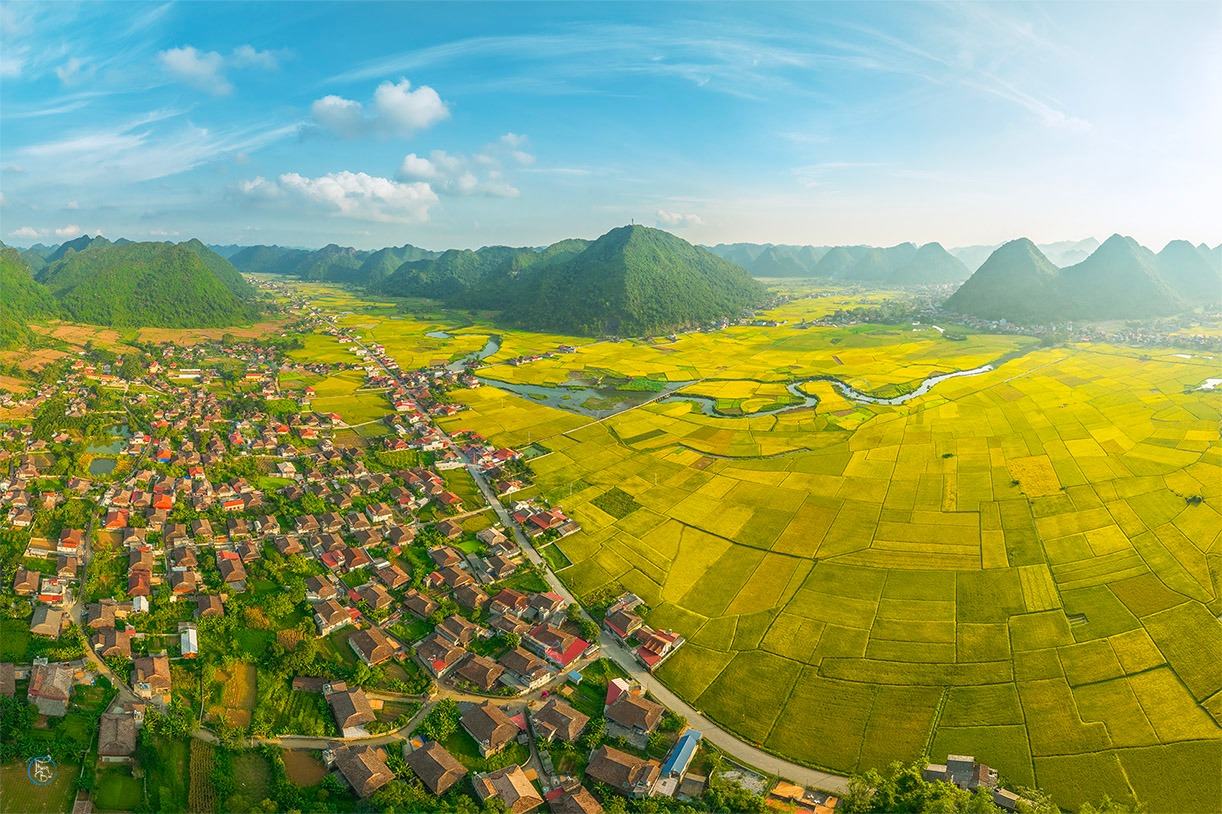
Quynh Son Community-based Tourism Village. Photo: Bui Thuan.
A distinctive feature of Quynh Son is that all residents are Tay people, all sharing the surname Duong. Through generations of settlement, this small community has remained closely united, jointly preserving traditional customs and practices and creating the village’s unique identity. The residents primarily engage in agriculture, closely connected to the rice fields stretching across the Bac Son Valley. Quynh Son is beautiful year-round, but most radiant during the rice harvest season, when the entire valley is draped in shimmering golden hues. From the peak of Na Lay, the valley unfolds like a magnificent natural painting: stilt houses nestled beside golden rice fields, with the fragrance of new rice carried by the breeze, evoking warmth and abundance. The tranquil atmosphere of stilt houses amid ripened fields seems to slow the pace of life, offering visitors a chance to fully sense the breath of the mountains and forests and the beauty of the Bac Son landscape.
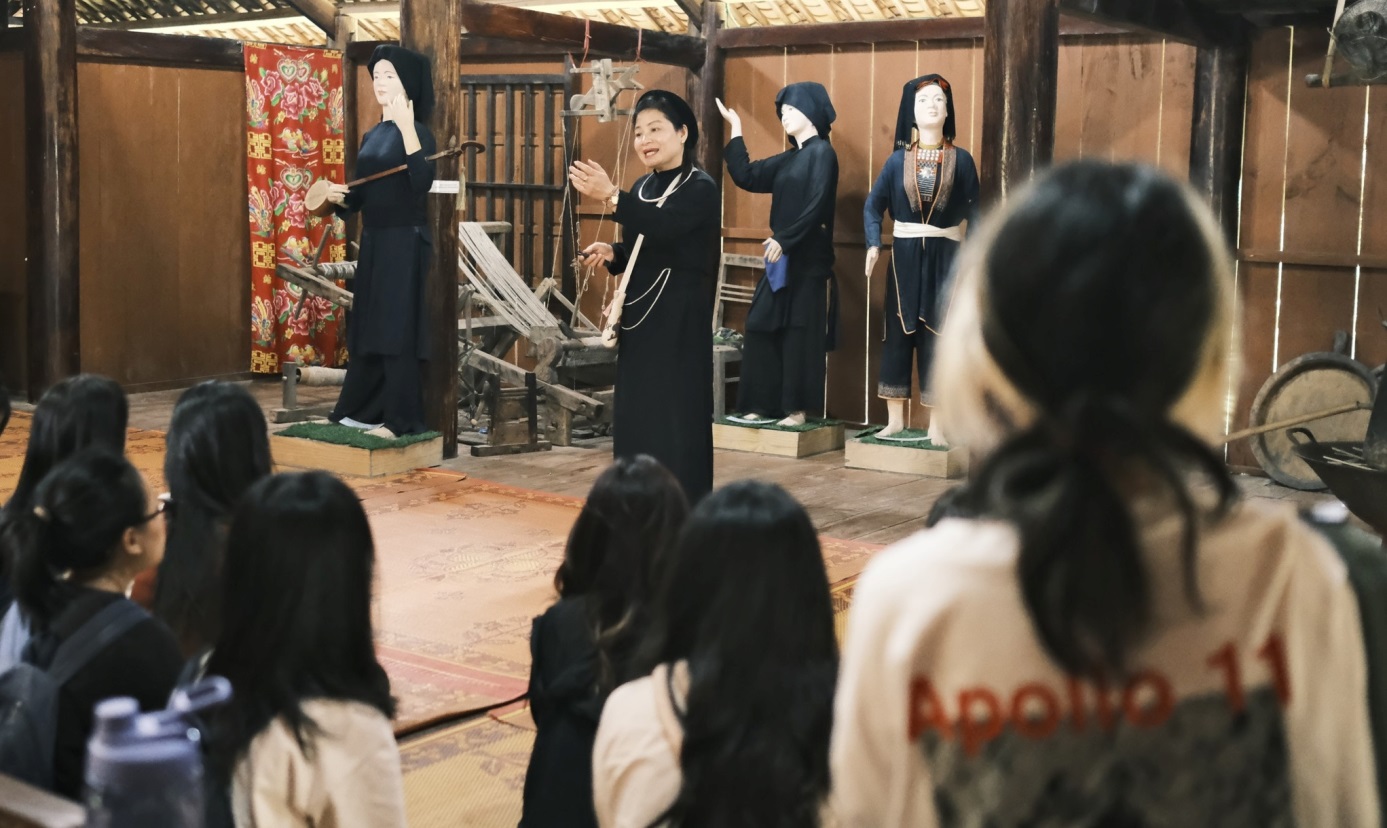
Visitors listening to an introduction to Tay ethnic culture. Photo: Collected.
Quynh Son Community-based Tourism Village attracts visitors not only with its beautiful natural scenery but also with unique cultural values preserved through generations. The Tay people here continue to maintain traditional lifestyles—from ancient stilt house architecture and customary practices to distinctive folk festivals. Every house and every alley in the village holds stories of time and a strong sense of community spirit. As visitors stroll through Quynh Son, they not only admire natural beauty but also fully experience the cultural rhythm rich in highland identity. The harmonious blend of nature and culture creates a Quynh Son that is peaceful, rustic, yet deeply captivating—a memorable destination for those seeking precious traditional values. In Quynh Son, visitors also have opportunities to participate in daily activities such as rice planting and harvesting, tree planting, cake making, practicing Then singing, playing the tinh lute; or to enjoy cultural and ecological experiences such as boating on Hoa Stream, cloud hunting atop Na Lay Peak, and making yin–yang roof tiles.
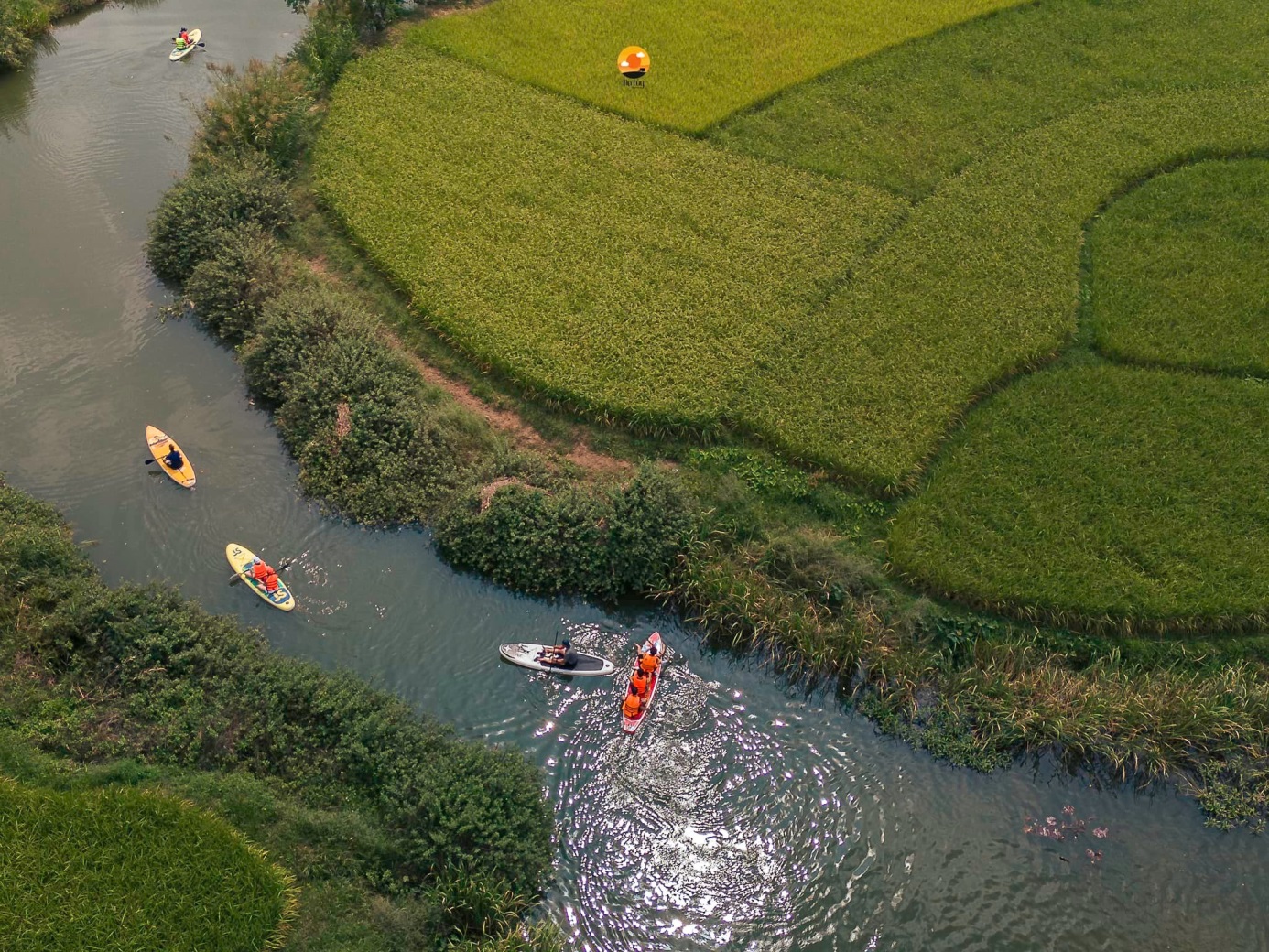
Visitors boating on Hoa Stream. Photo: Collected.
Quynh Son Community-based Tourism Village further charms visitors with its distinctive cuisine infused with mountain flavors. One specialty not to be missed is black banh chung, whose distinctive color and flavor come from an ingredient made of ash from sticky rice straw. In addition to black banh chung, mountain ginger sausages are another unforgettable local delicacy. Enjoying Quynh Son’s cuisine not only satisfies the palate but also offers a way to experience local culture, daily life, and the craftsmanship of its people.
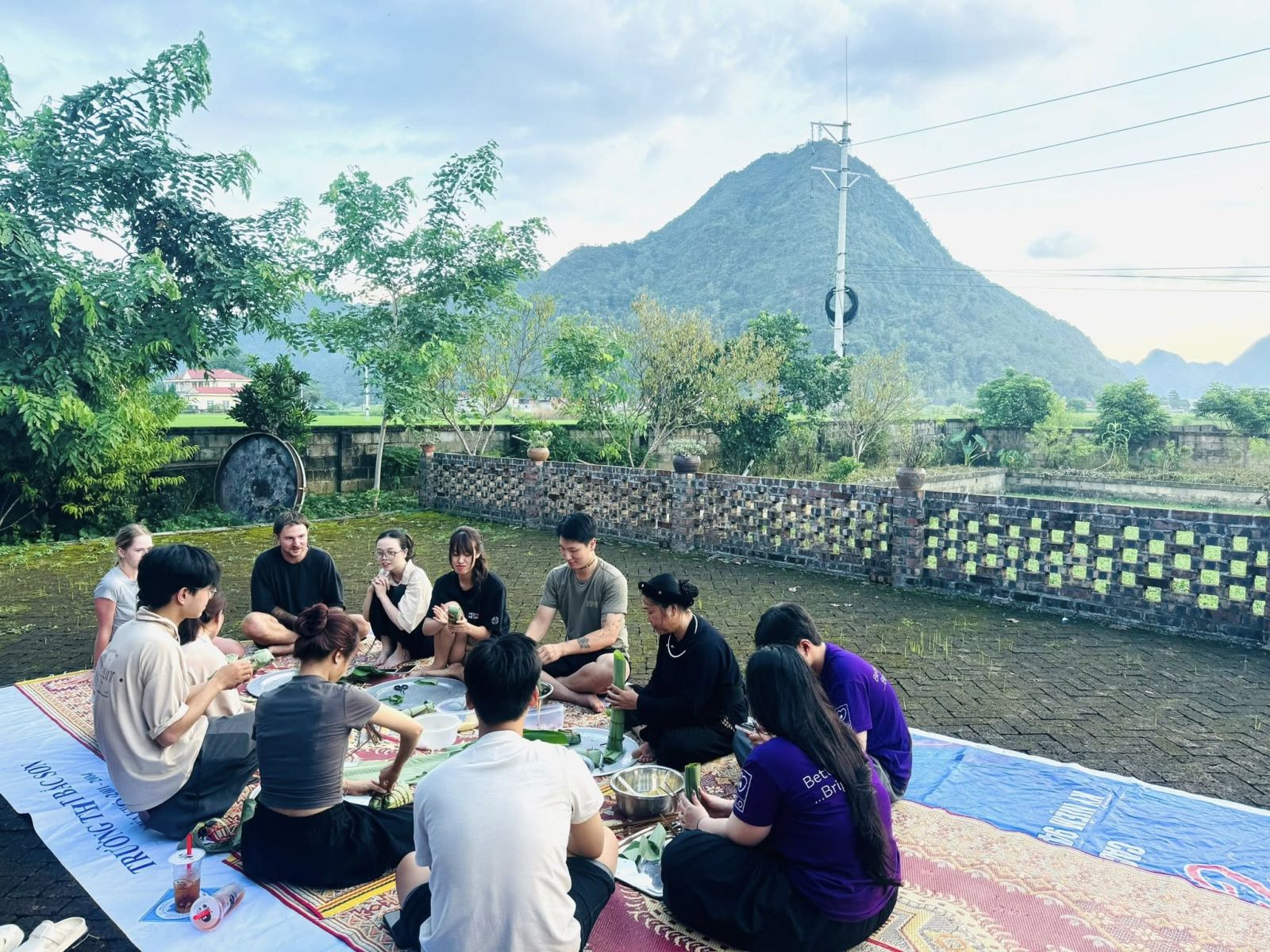
Visitors experiencing the making of black banh chung. Photo: Collected.
Quynh Son Community-based Tourism Village was established in 2010 and officially became a local tourism destination in 2015. The title “Best Tourism Village in the World 2025” has further enhanced its appeal, positioning Quynh Son as an attractive destination for both domestic and international visitors. In the coming period, Lang Son Province, with its orientation toward continued sustainable tourism development, will focus on preserving landscapes, protecting the ecological environment, and promoting indigenous cultural values; at the same time, connecting Quynh Son Community-based Tourism Village with the system of routes and destinations within the UNESCO Lang Son Global Geopark, forming inter-regional and inter-provincial tours and diversifying tourism products such as agricultural tourism, craft villages, and culinary tourism, thereby contributing to local socio-economic development./.
La Viet