



On the morning of 1 August 2026, in Hanoi, the 33rd Diplomatic Conference, themed “Promoting the pioneering role, implementing the key and regular tasks of Viet Nam’s foreign affairs in the new era” officially opened. General Secretary and State President To Lam attended and delivered the keynote guidance at the Conference.
The Conference was attended by Party and State leaders; Politburo members, Secretaries of the Party Central Committee and Members of the Party Central Committee; leaders of central Party and State commissions, ministries, sectors, agencies and localities.
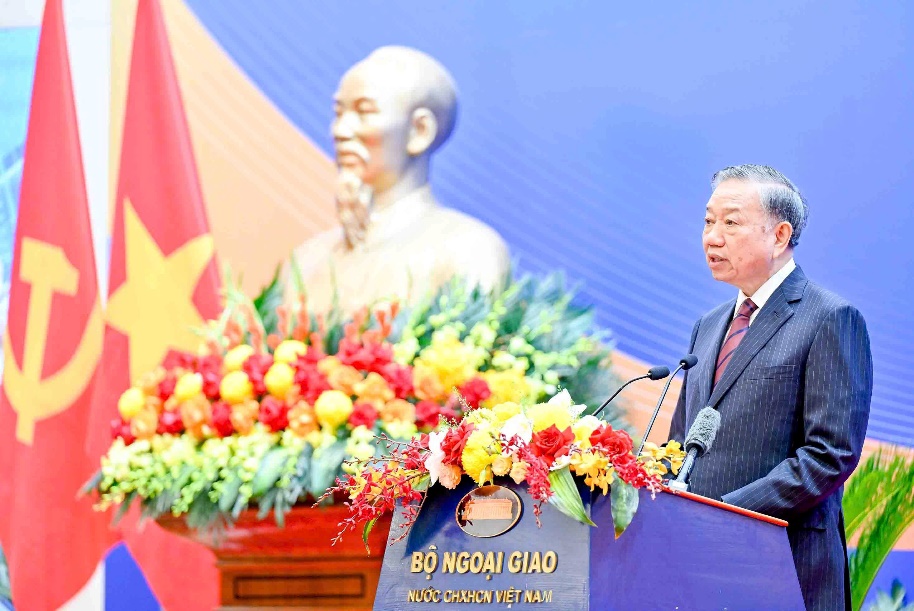
General Secretary, State President To Lam delivers guidance remarks at the Conference. Photo: Nguyen Hong
Representing the Ministry of Foreign Affairs, Mr Le Hoai Trung, Politburo Member and Minister of Foreign Affairs attended the Conference; current and former leaders of the Ministry of Foreign Affairs; and Heads of Vietnamese representative missions abroad.
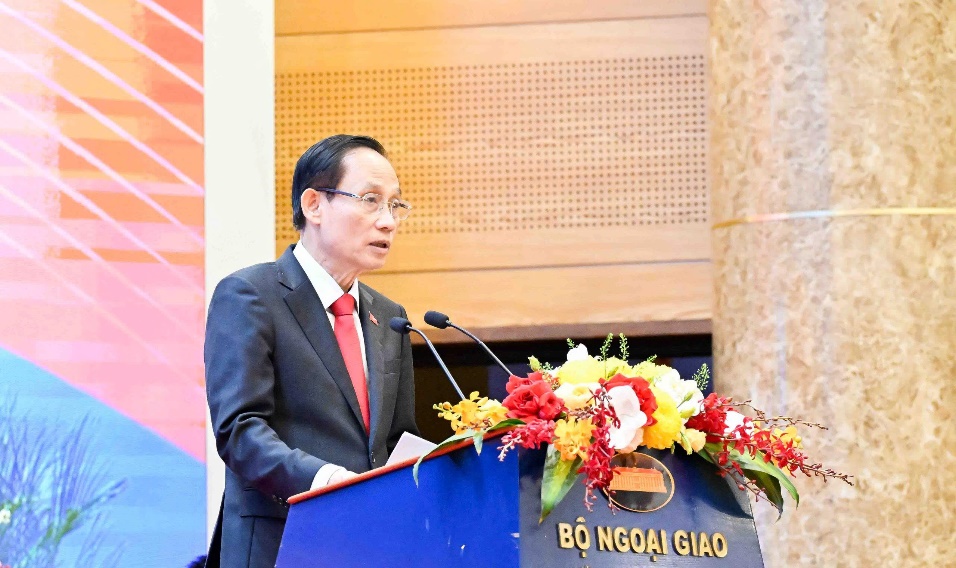
Mr. Le Hoai Trung, Politburo Member and Minister of Foreign Affairs, delivers remarks at the Conference. Photo: Nguyen Hong
The Conference was connected online to 34 provinces and centrally governed cities. In Lang Son, there were Ms. Doan Thi Hau, Standing Deputy Secretary of the Provincial Party Committee and Chairwoman of the Provincial People’s Council; Ms. Doan Thu Ha, Deputy Secretary of the Provincial Party Committee, Head of the Provincial National Assembly Delegation and Chairwoman of the Viet Nam Fatherland Front Committee of the province; Members of the Standing Committee of the Provincial Party Committee and leaders of relevant provincial departments, boards and sectors.
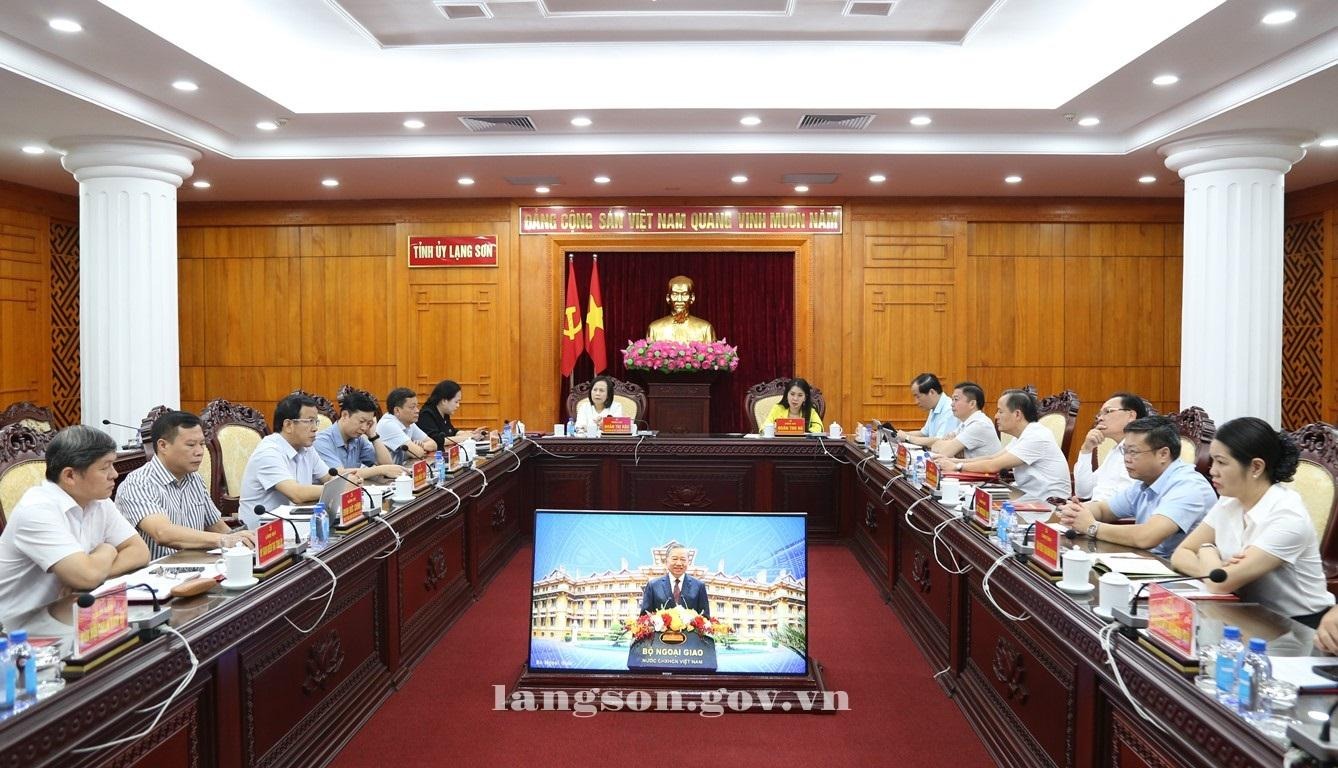
Delegates attend the Conference from Lang Son province. Photo: Thuy Linh
In his opening remarks, Mr. Le Hoai Trung, Politburo Member and Minister of Foreign Affairs, emphasized that the Conference was being held at an important juncture, following the successful organization of the 14th National Party Congress, the election of deputies to the 16th National Assembly and the election of People’s Councils at all levels. The Party and State have set out important and historically significant guidelines and policies to achieve the country’s strategic 100-year development goals, including the identification of foreign affairs and international integration as key and regular tasks.
Accordingly, the Conference is tasked with thoroughly understanding and concretizing the foreign policy of the 14th National Party Congress, achieving unified understanding and action across the entire sector, and meeting the new requirements and tasks of foreign affairs on the foundation of the country’s achievements and potential after 40 years of Doi Moi.
The 33rd Diplomatic Conference comprises 18 sessions and takes place from 1 to 7 August 2026. The Conference focuses on studying and discussing such issues as gaining a proper understanding of the country’s development guidelines and tasks, particularly the two 100-year development goals; the guidelines and policies adopted by the 14th National Party Congress, the Party Central Committee, the Politburo, the Party Central Committee Secretariat, the Government and the National Assembly; as well as the major orientations and guiding perspectives of General Secretary and State President To Lam on the new development model, foreign affairs and international integration; developing a proper understanding of foreign affairs and international integration as key and regular tasks; and thoroughly disseminate the major orientations and guiding perspectives of the Party, State and General Secretary and State President on foreign affairs and international integration in the new period.
The sessions of the Conference will discuss and assess the world and regional situation in the coming years, including relations among major powers and with neighboring countries; territorial and border issues; the formulation of a comprehensive foreign policy strategy at a new level; diplomacy in service of development; science, technology and innovation development; support for businesses; and Party and sector building.
The Conference will closely follow its key objectives and tasks and include a number of new sessions, such as sessions on Party-to-Party diplomacy and people-to-people diplomacy, as well as National Assembly diplomacy. For the first time, a meeting among the Ministries of National Defence, Public Security and Foreign Affairs will also be held during the Conference. The Conference will also discuss measures to improve the quality and effectiveness of the work of Vietnamese representative missions abroad.
In his guidance remarks, General Secretary and State President To Lam emphasized that the Conference was taking place as the country enters a new stage of development after more than 80 years since national independence and 40 years of Doi Moi. For the first time, a Resolution of the National Party Congress has identified diplomacy and foreign affairs as “key and regular” tasks. Foreign affairs is no longer merely a field dealing with external relations, but has become a component of the country’s comprehensive national strength and a cause of the entire Party, people, armed forces and political system. Therefore, this Conference is of particular significance, going beyond the framework of a conference of the diplomatic sector and serving as an important occasion to discuss foreign affairs across the entire political system.
To translate the foreign policy of the 14th National Party Congress and the Party’s resolutions into practice, General Secretary and State President To Lam called on the diplomatic sector and foreign affairs agencies to focus on six key tasks.
First, continue to renew thinking and improve the quality of research, forecasting and strategic policy advice. Research must take the lead, helping Party and State leaders identify trends, opportunities and risks at an early stage and avoid strategic surprises; with a focus on issues that have direct and long-term impacts on national security and development, such as adjustments to the strategies of major powers, artificial intelligence, semiconductors, the digital economy, green transition, cybersecurity and data security.
Second, deepen and enhance the effectiveness of foreign relations. Established and upgraded frameworks for relations must be translated into action programs and projects with measurable outcomes; upgrading relations means opening a new chapter. The effectiveness of relations is reflected in the consolidation of a peaceful environment, expanded markets, the formation of new projects, enhanced technology and human resources, and tangible benefits for the people.
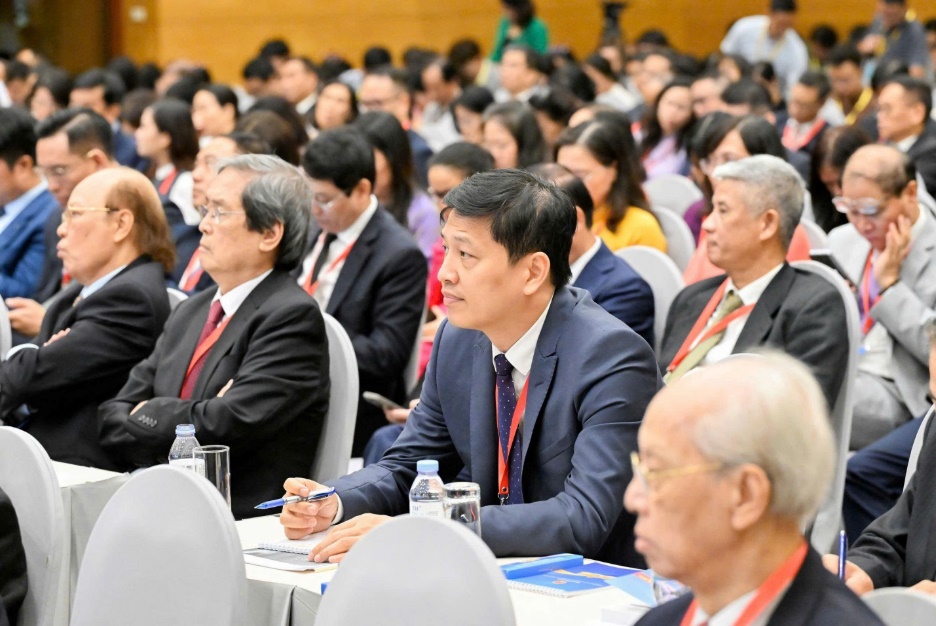
Mr. Vu Hoang Anh, Deputy Secretary of the Lang Son Provincial Party Committee, attends the Conference.
Third, deepen development-oriented diplomacy, with substantive effectiveness as the key measure. Priority should be given to mobilizing resources for science, technology, innovation, digital transformation, development of the private sector and improvement of the quality of foreign investment; selectively attracting high-tech projects in semiconductors, artificial intelligence, digital infrastructure, clean energy and modern agriculture, while linking investment with technology transfer, human resource training and the participation of Vietnamese enterprises.
Fourth, elevate multilateral diplomacy and implement comprehensive, coordinated and effective international integration. Continue to promote Viet Nam’s role at the United Nations, ASEAN, APEC and Mekong subregional cooperation mechanisms; contribute to peacekeeping, climate change response and sustainable development; and prepare early for Viet Nam’s hosting of APEC Year 2027 in terms of content, initiatives, logistics and human resources, as well as mobilizing support. Implement Resolution No. 59 in conjunction with international integration, institutional improvement and the strengthening of domestic capabilities.
Fifth, fundamentally renew coordination, inspection and implementation mechanisms, with a focus on removing bottlenecks. The Central Steering Committee on Foreign Affairs and International Integration should promote its role in strategic direction and unified coordination; the Ministry of Foreign Affairs, as the standing body, should effectively perform its functions of policy advice, synthesis, coordination and supervision, proactively identify outstanding obstacles and propose solutions. This includes promoting the role of inter-sectoral coordination mechanisms and heads of agencies, as well as developing a unified database on treaties, agreements and international commitments.
Sixth, attach particular importance to building a contingent of foreign affairs officials with the qualities, capabilities and credibility required to meet the demands of the new period. Recalling State President Ho Chi Minh’s teaching that “cadres are the root of all work,” General Secretary and State President To Lam called for proper attention to every stage, from recruitment, training and evaluation to placement and utilization, with qualities, capabilities and work results serving as the key criteria; and for the early development of a pool of highly qualified experts specializing in key geographical areas and emerging fields.
General Secretary and State President To Lam expressed his confidence that, building on the tradition of Vietnamese revolutionary diplomacy and with their intelligence, mettle and sense of responsibility, the entire diplomatic sector and foreign affairs forces will remain united, proactive and creative, successfully fulfill their tasks, contribute to maintaining peace, safeguarding the Fatherland, expanding development space and enhancing Viet Nam’s international standing.
At the Opening Session, leaders of ministries, sectors and localities presented about issues related to the implementation of the foreign policy of the 14th National Party Congress./.
Mai Thu